

Chapter 9 — Conclusion: Keep Selling Anyway
If you’ve made it this far, you’ve done more than most founders ever will. You’ve built something, talked to people about it, charged money for it, listened, adapted, and learned. You’ve stepped out of the comfort zone of building and into the unpredictable arena of selling.
And if at times it felt awkward, exhausting, or even mildly humiliating — good. That means you were doing it right.
Because selling, at its core, isn’t about tactics or scripts. It’s about learning how your work fits into the lives of other people. That’s the essence of entrepreneurship, understanding others so well that your product becomes a natural extension of their needs.
The Founder’s Paradox
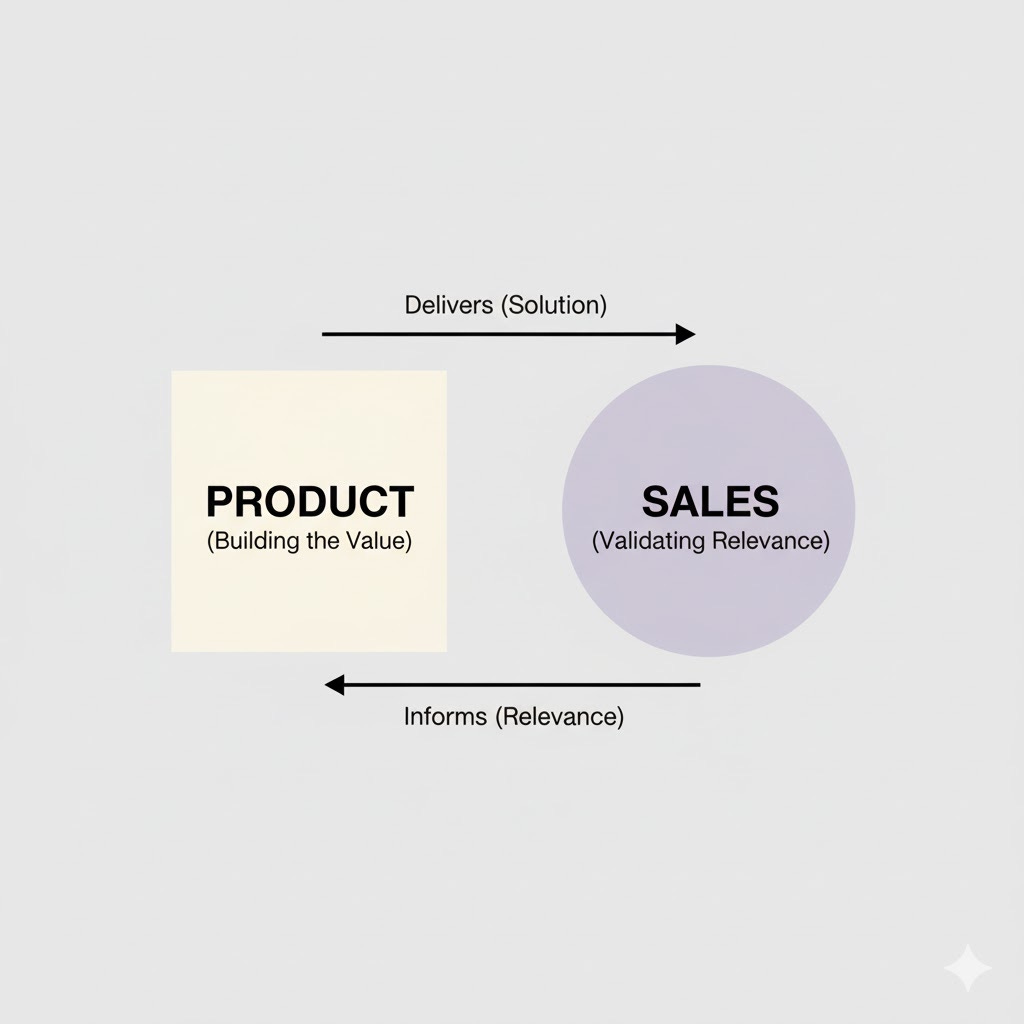
There’s a funny thing that happens once founders start getting good at sales. They begin to see that sales and product aren’t opposites — they’re the same conversation, just happening from different sides.
Sales shows you why your product matters. Product is how you deliver that value.
When you treat them as two halves of the same system, you start to see your business as one continuous feedback loop: every sale informs what you build next, and every improvement you make opens new sales opportunities.
💡 Takeaway: Sales isn’t the opposite of building. It’s how building stays relevant.
The Myth of the “Real Seller”
By now, you’ve probably realized that you don’t need to transform into some extroverted, high-energy, suit-wearing closer to succeed. That’s a myth left over from another era — when “sales” meant pressure, charm, and manipulation.
In modern startups, the best sellers are the best listeners. They’re curious, analytical, and honest. They sound more like consultants than closers. And as a founder, you already have those skills — you’ve just been using them on code, design, or systems instead of people.
So if you ever catch yourself thinking, “I’m not a sales type,” remind yourself: you’ve been selling since the day you convinced someone to join your team, invest in your idea, or give your product a chance. You’ve been doing this all along — just under a different name.
💡 Takeaway: You don’t have to become a salesperson. You just have to stay a problem-solver.
Progress, Not Perfection
You won’t master every part of this overnight. Some weeks you’ll feel unstoppable; other weeks you’ll question everything. You’ll lose deals that seemed certain and win ones that seemed impossible.
That’s normal. Sales isn’t a straight line — it’s a series of experiments, each one teaching you something new about your market, your product, and yourself.
The real progress happens quietly, when you start recognizing patterns without even trying. When you instinctively know what questions to ask, what tone to take, when to push, and when to pause. That intuition is your reward for showing up and doing the work.
💡 Takeaway: Momentum beats mastery.
The Emotional Truth About Selling
Let’s be honest: selling can be emotionally draining. You’ll get ignored, misunderstood, and occasionally patronized. Some people will waste your time. Some will copy your ideas. But you’ll also meet people who get it — who see what you see, and get excited about where it could go. Those conversations will recharge you more than any funding round ever could.
At its best, selling is about connection. It’s one human saying to another, “I built this because I thought it might help you,” and the other replying, “Actually, yes — it does.”
That’s the moment all the rejection, awkward pauses, and early mornings make sense. It’s the moment your product stops being just yours and starts belonging to someone else, too.
💡 Takeaway: Selling is how your idea learns to live in the real world.
What to Expect Next
If your company succeeds, there will come a day when you’re no longer the one doing the demos or answering customer emails. Someone else will take over. That’s good — it means you’ve built something bigger than yourself.
But even when you’re not the one selling directly, you’ll always be selling indirectly. You’ll sell your vision to your team, your strategy to investors, your mission to partners. The skills you learned here — clarity, empathy, storytelling, persistence — will follow you everywhere.
So don’t think of this founder-led sales period as a temporary inconvenience. Think of it as your MBA in reality. It’s where you learned what no spreadsheet or accelerator could ever teach you: how markets actually behave when they meet your idea.
💡 Takeaway: Sales skills age well. You’ll use them for the rest of your career.
Looking Back: Your Founder Sales Roadmap
Let’s recap the journey you’ve just walked through:
Reality Check: You built it, but nobody came — so you went out and met them.
The Evangelical Phase: You embraced the chaos and did things that didn’t scale.
Mindset Makeover: You unlearned your product bias and started thinking like a listener.
Crafting Your Sales Story: You found words that made sense to real people.
Learning to Listen: You stopped pitching and started understanding.
Pricing Without Losing Your Mind: You learned to value your value.
Recording Everything: You turned random insights into repeatable knowledge.
Letting Go: You prepared someone else to carry the torch.
If you’ve done these things, you’re already far ahead of the curve. Most startups never make it this far because they avoid the uncomfortable parts. You didn’t.
💡 Takeaway: You don’t grow by scaling. You scale because you’ve grown.
Final Thoughts
Selling will always be a part of your job — not because you love it, but because it keeps you honest. It keeps you close to the people who matter most: your customers. It reminds you that every product, no matter how innovative, lives or dies by its ability to solve real problems for real humans.
So keep selling anyway. Not just for the revenue — for the understanding, the humility, and the empathy it builds.
Because in the end, that’s what great founders and great sellers have in common: they both spend their lives trying to make something — or someone — a little bit better than they were before.
💡 Final Takeaway: Sales isn’t a phase. It’s a mirror that reflects how well you understand the world you’re trying to change.
Massimiliano Pani is a Sales and Customer Success expert and Founding Member of Quiet Edge, based in Mallorca, Spain. With nearly a decade of experience spanning the full sales spectrum—from business development to enterprise sales—he now focuses on helping technical founders navigate their first sales motions. Follow him on LinkedIn.