


I’m Kate, Fractional CMO for edtech startups, and whenever I begin a role, I use six questions to challenge myself and the teams I’m supporting. They are a compilation of the best lessons I’ve learned from my mentors and hands-on experience
Big reveal Number #4:
4. How can we make our $1 budget work like $10?
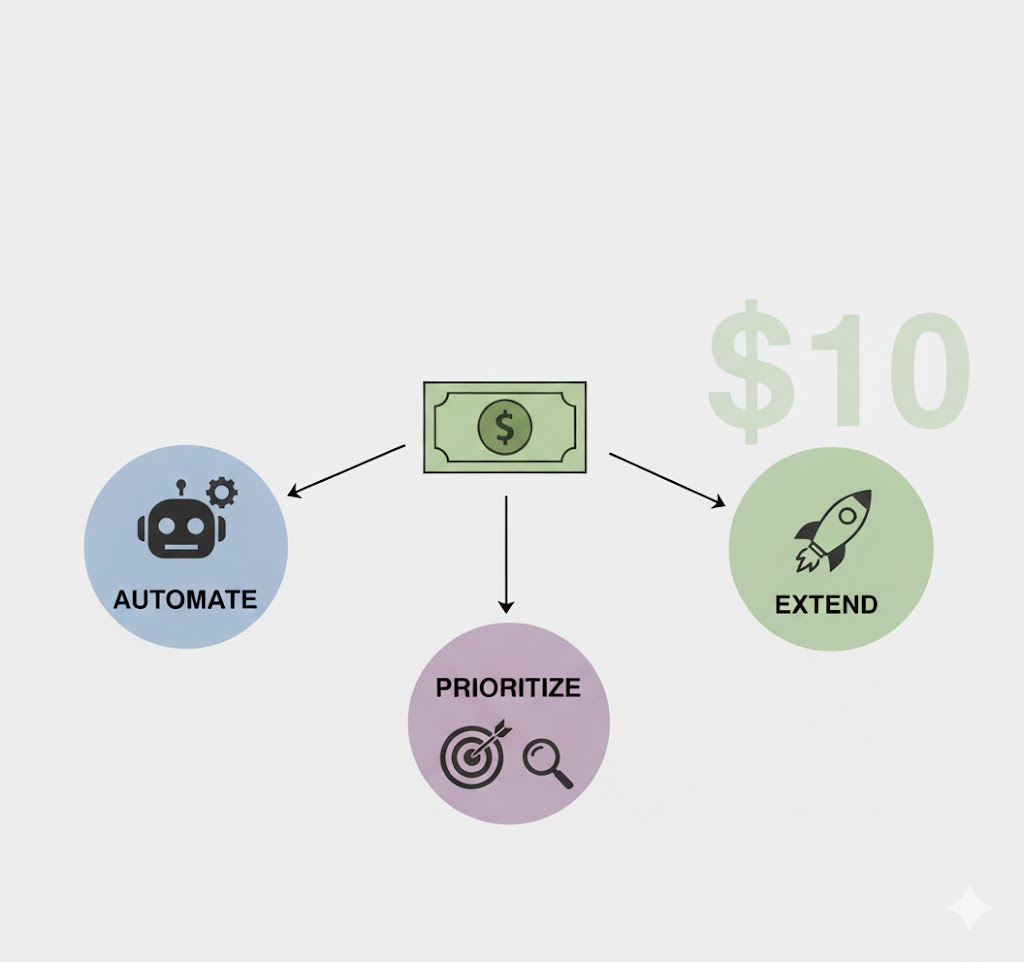
At the pre-seed stage, almost every founder feels the pinch: $1 seems like $0.
Your goal isn’t flashy campaigns, it’s leverage.
But how can every dollar, hour, and resource work 10x harder for the growth of your audience, customer base, revenue and customer lifetime value?
Let’s explore three solutions: automation, prioritization and runway extension.
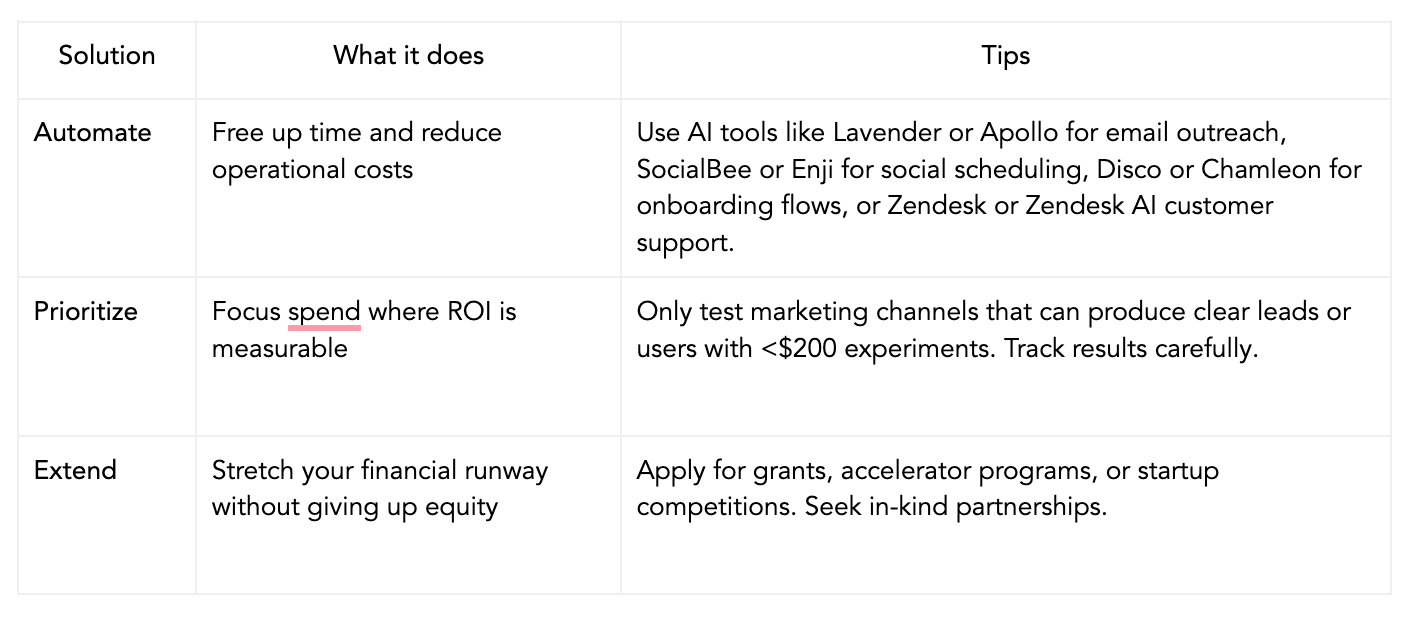
Classic problems
- Burning $5k/month on paid ads too early.
- DIY-ing everything instead of leveraging AI and delegating to fractional support.
- Ignoring non-dilutive funding options.
Risks of not fixing
- You run out of cash before PMF.
- Burnout from trying to do everything manually.
Actionable plan (do this week)
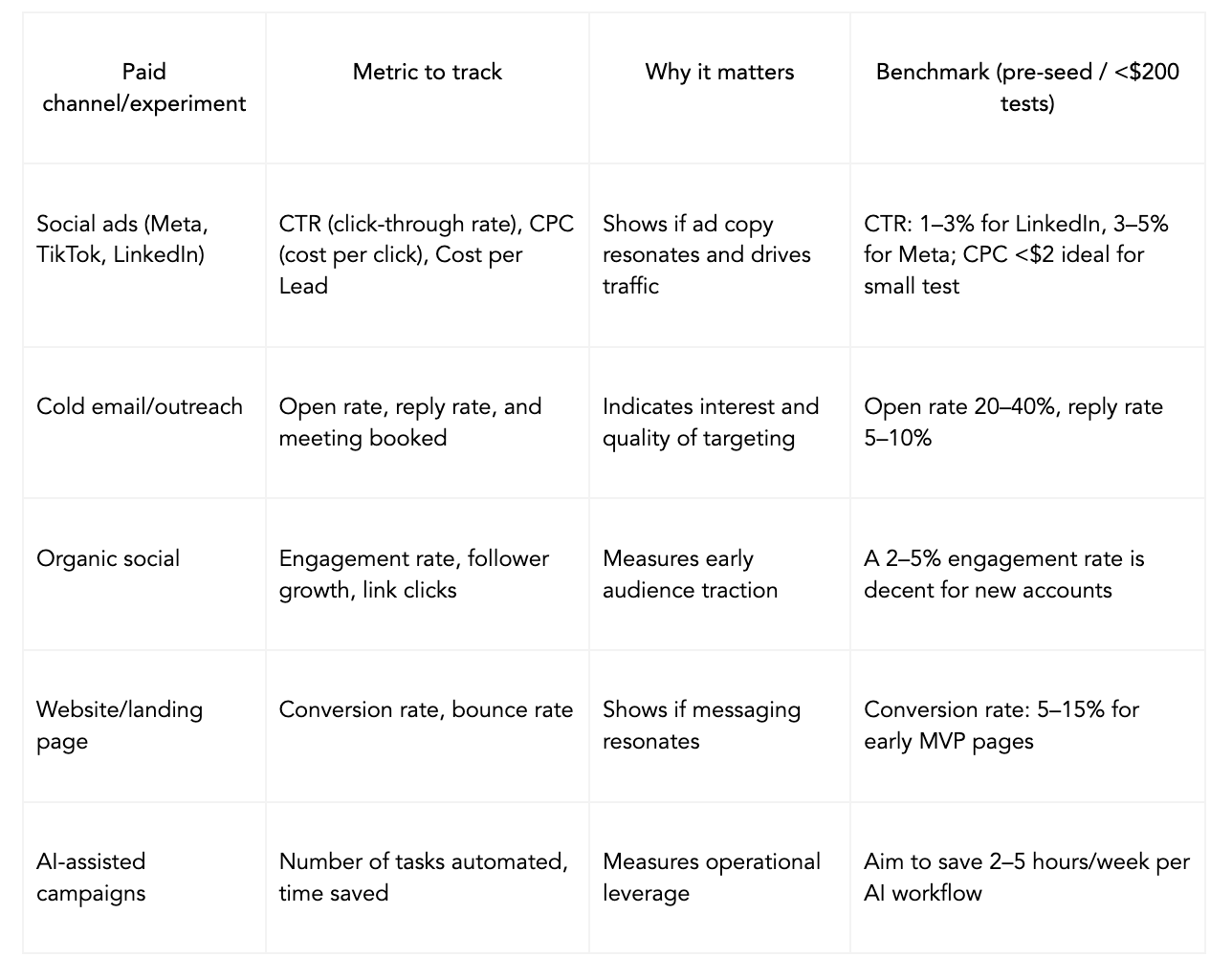
Pick 1 paid channel and test with <$200. Track metrics carefully.
Choose metrics by type of test
1. Pick 1 paid channel and test with <$200. Track metrics carefully. Options:
Generate AI prompts to develop campaign copy, emails, or social posts. Aim for automation, not perfection.
Research 2 grants or accelerator programs and submit applications.
Steal this prompt

Act as a senior growth marketing consultant for early-stage startups.

My startup operates in [industry/niche] and I have a limited marketing budget of [budget amount, e.g., $200] for [time frame, e.g., this month]. I want to maximize impact using AI, automation, and high-ROI growth tactics.

Please suggest strategies across three areas:

1. Paid channel experiments – small, cost-effective campaigns to test quickly.

2. AI tools for automation – ways to save time or scale marketing activities.

3. Alternative funding options – grants, competitions, or other non-dilutive funding sources suitable for a startup in my niche.

For each suggestion, include:

Expected cost or effort
Potential ROI or impact
Any caveats or risks

Also, suggest any overlooked opportunities or creative approaches I might explore given this budget and context.
These companies figured it out
B2B case study
SuperOps.ai (early days) SuperOps.ai started with minimal funds to launch a workflow automation SaaS. They focused on automating demos, customer onboarding, and reporting. Instead of paid ads, they leveraged LinkedIn outreach and co-marketing with complementary SaaS tools. This approach cut costs drastically, extended runway, and generated qualified leads before raising a seed round.
B2C case study
Lunchclub (relaunched 2023) Lunchclub relied on AI-driven matching to automate onboarding and outreach. Minimal spend went into testing paid campaigns, while organic buzz and viral loops carried adoption. By keeping operations lean, they extended runway and built a loyal user base before scaling.
More B2B tips
Automate repetitive tasks: Use tools like HubSpot or Salesforce to automatically log customer interactions, set follow-up reminders, and segment leads. For reporting, connect your CRM or Google Analytics to dashboards (e.g., Data Studio, Looker) that refresh weekly or daily without manual work. Automate outreach emails with sequences in tools like Lemlist or Mailshake.
Leverage free reach: Share expertise through webinars, speaking slots at industry events, or guest articles on partner blogs. Co-marketing partnerships—like joint webinars, whitepapers, or social posts with complementary companies—can expand your audience without paid ads.
Apply for non-dilutive funding: Identify relevant grants, accelerator programs, or industry competitions. For example, tech startups can apply for government innovation grants, while SaaS businesses can pitch at growth-focused accelerators for cash or resources without giving up equity.
More B2C tips
Automate marketing touchpoints: Schedule social media posts with Buffer or Later, automate email campaigns using Klaviyo or Mailchimp, and set up chatbots or community management tools to handle common customer inquiries.
Encourage user-generated content: Run campaigns that invite customers to share photos, reviews, or stories using a branded hashtag. Incentivize sharing through small rewards, contests, or featuring customers on your channels to create viral loops.
Boost reach without spending big: Explore micro-grants or contests to fund small campaigns, or collaborate with micro-influencers whose audience aligns with yours. Partner with local creators for content swaps, giveaways, or social challenges to amplify buzz organically.
Kate Busby is CoFounder of Quiet Edge and a Fractional CMO based in Barcelona, Spain, catch her on X and Instagram. The images are extracted from X and created by MidJourney. No names and identifying details have been changed. Subscribe to Substack to receive all articles in the “Rules of Growth” series straight to your inbox.
🤝 Want to work together? ⏩ Check out the options and let me know how we can join forces.